PrimeMeet 2026
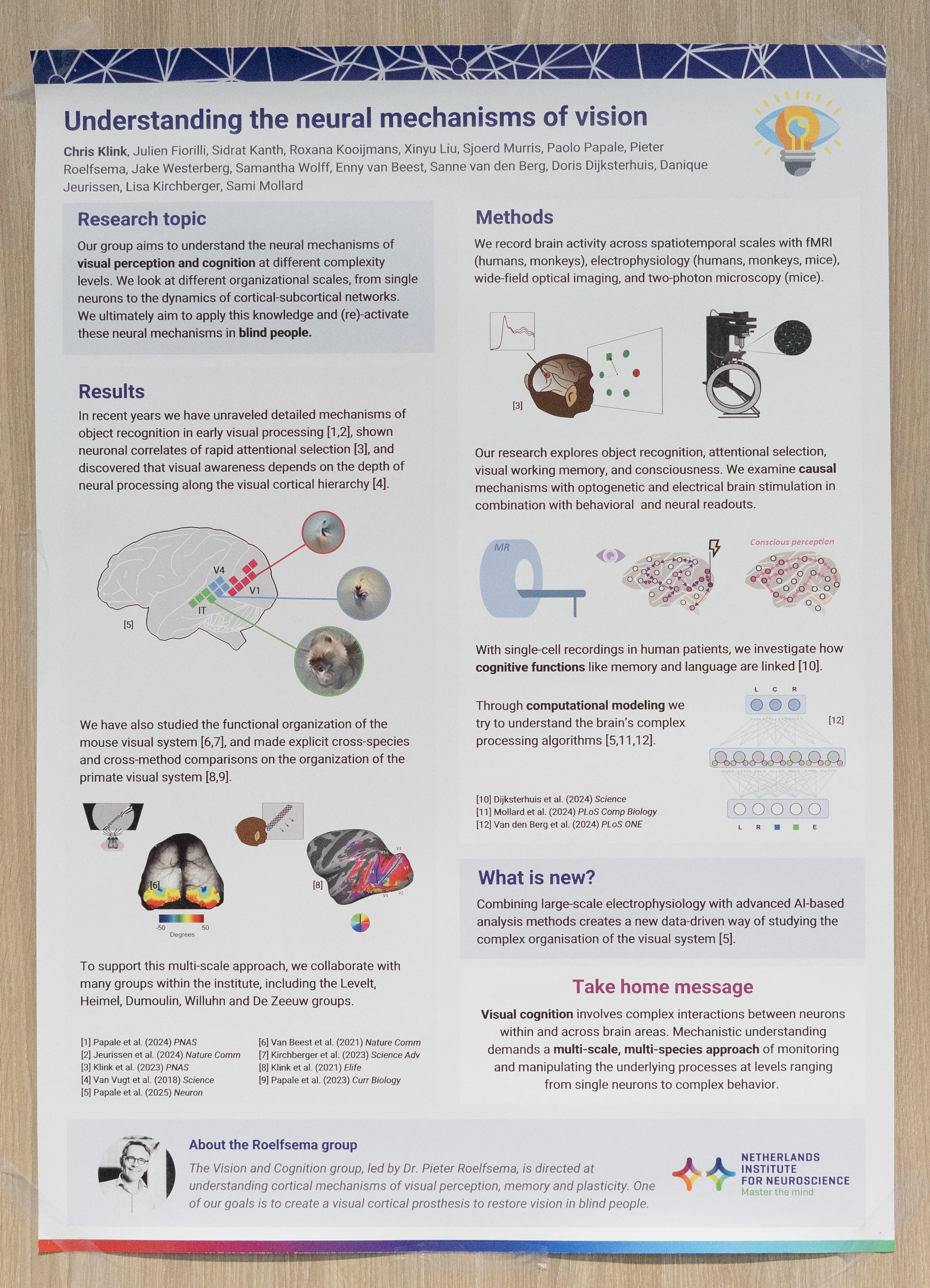
Contrary to popular belief, research with non-human primates is still very important! A small number of animals are studied to answer questions that matter for both human and animal health (think infectious diseases like covid, malaria and Ebola) but also to answer something more fundamental: how do we work? How does the brain function normally, and what goes wrong in conditions like Parkinson's and Alzheimer's disease?
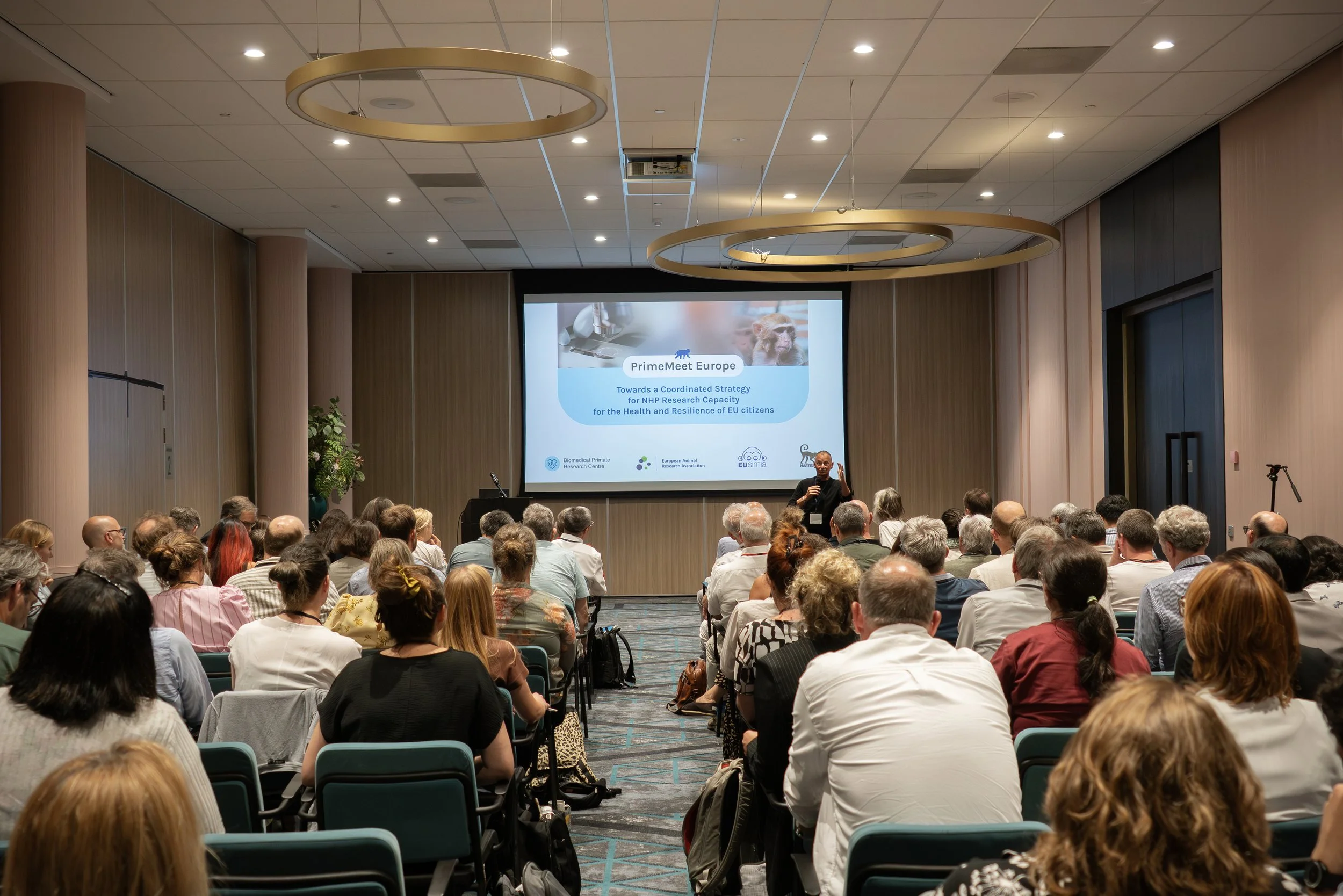
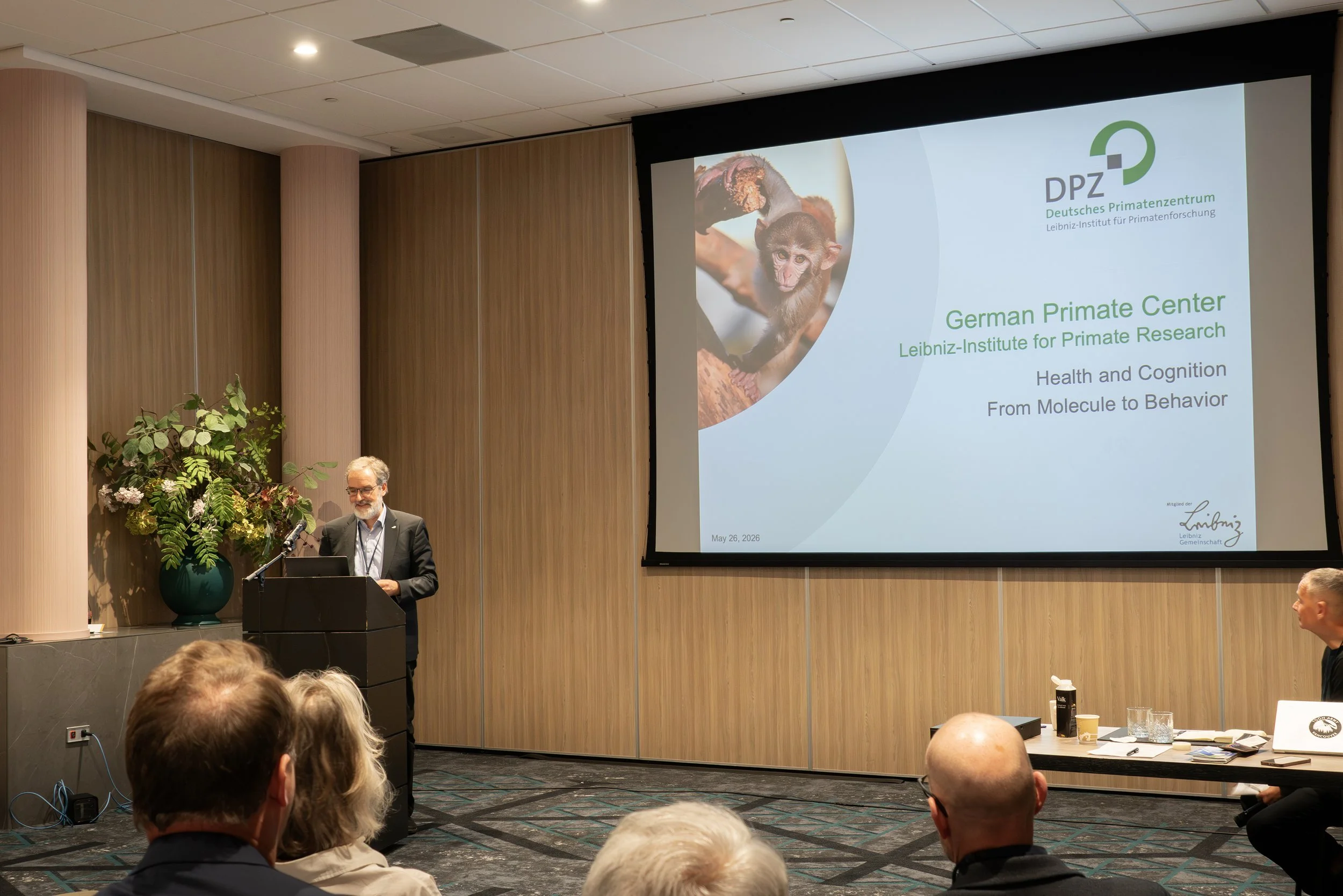
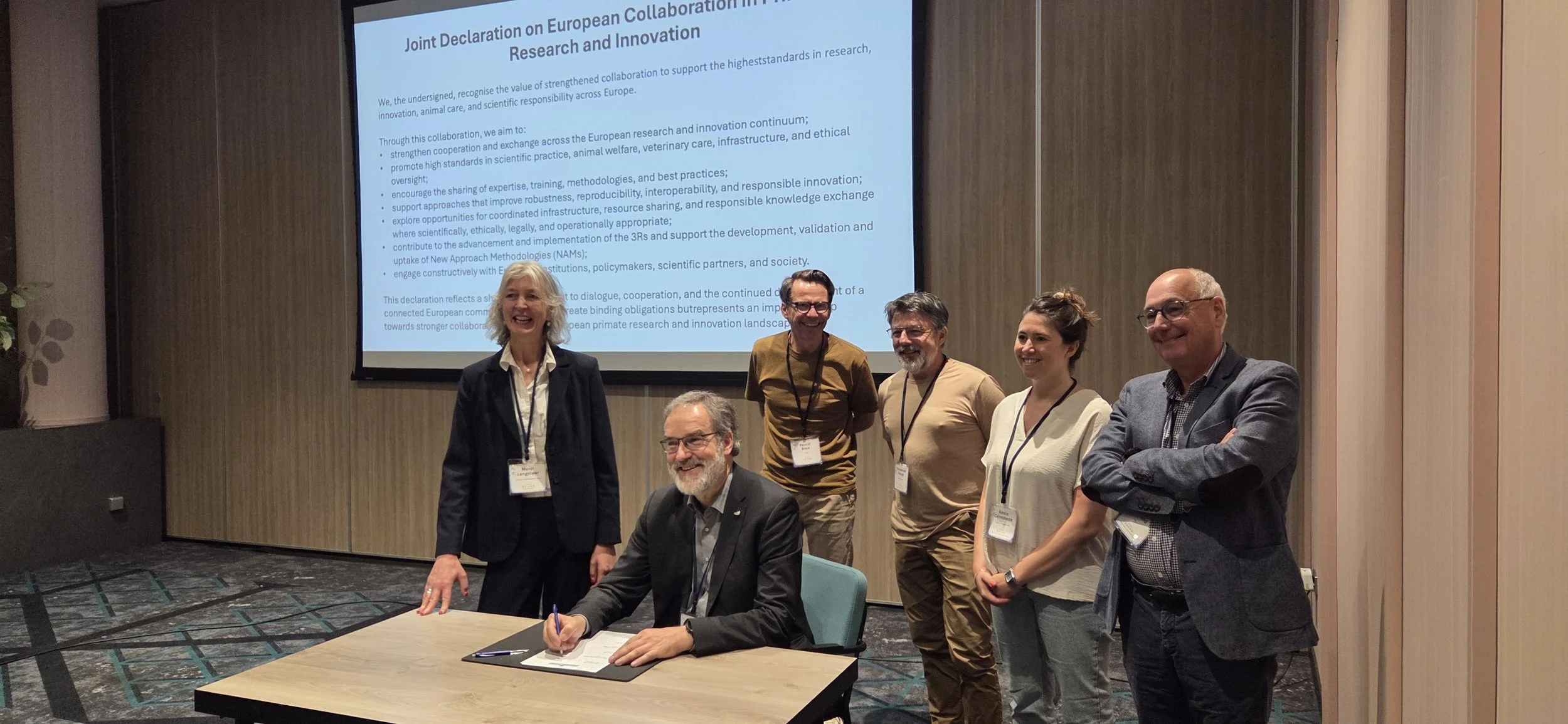
To better organize primate research across Europe, the Biomedical Primate Research Centre (BPRC) organized the PrimeMeet Europe conference. Research centres, scientific organizations, and partners came together to brainstorm about animal welfare, research priorities, infrastructure, communication, and innovation. We need to know what's happening in other labs, so that the small number of non-human primates available within the European Union is used as efficiently as possible to answer key questions.
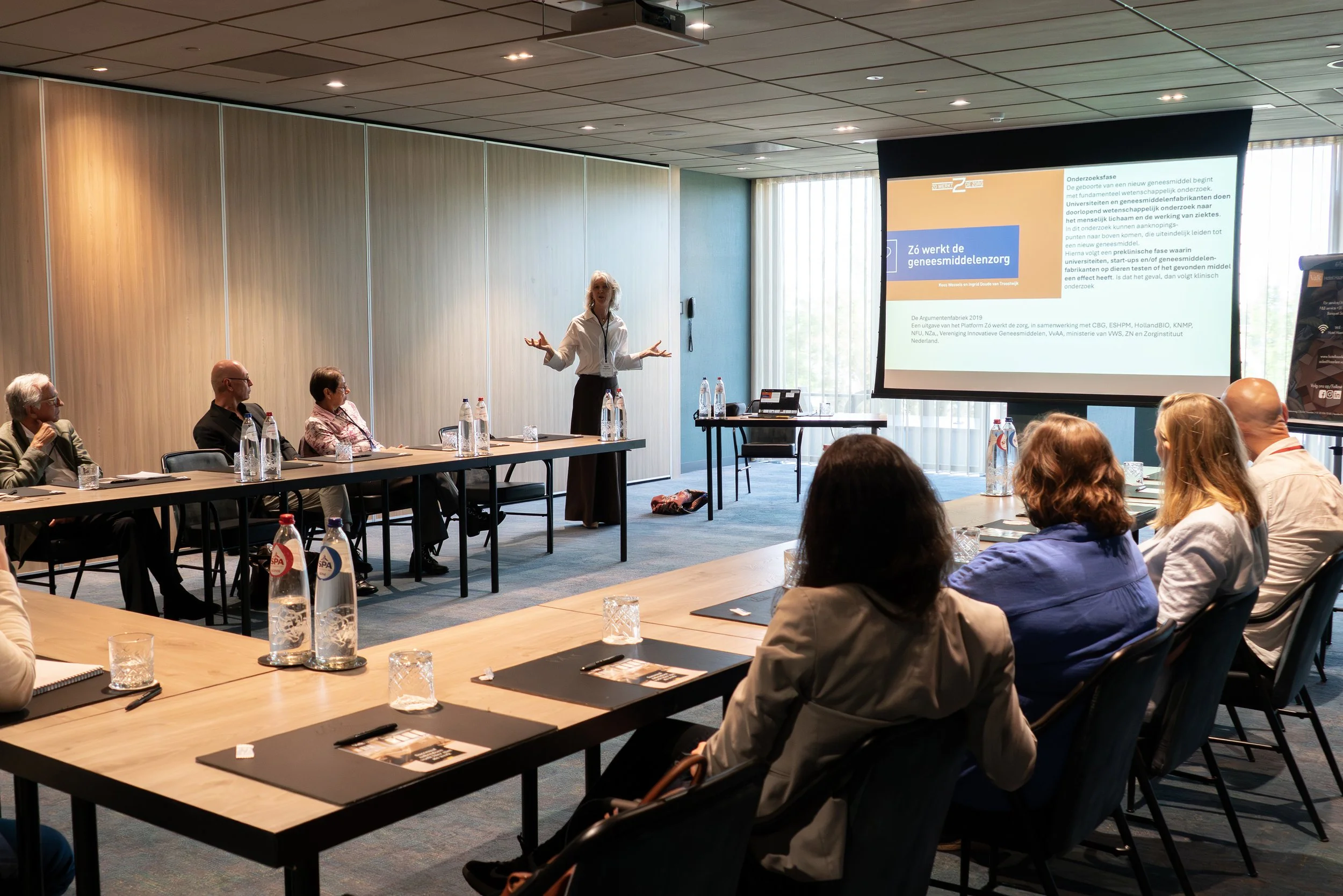
The BPRC asked me to help moderate a session on neuroscience, and I happily accepted. No screens allowed, so I was armed with post-its and break-out groups (skills I picked up from guest lectures). We spent the session mapping out where primates are indispensable to the field, and more importantly, where the field is stuck. What are the biggest bottlenecks right now, and how do we clear them?
Four themes emerged.
Funding & Cost Sustainability. Costs are high and rising, driven largely by welfare standards, while colony sizes stay small. Individual grants don't cover the infrastructure these facilities need. The consensus: this field needs CERN-style strategic, shared funding, not a patchwork of per-researcher grants.
Regulation & Policy Reform. The same EU directive is applied inconsistently from country to country. Animal supply is a major bottleneck (the UK in particular is hampered by import restrictions) and there's a clear push to shift from importing animals toward breeding them domestically.
Training & Workforce. NHP-specific training isn't part of the EU directive, which sometimes forces reliance on researchers trained abroad. But the harder problem isn't recruitment, it's retention. The jump from postdoc to professor feels daunting, and animal technicians are often underpaid and undervalued for the highly skilled work they do.
Collaboration & Data Sharing. Progress is slowed by paperwork and by the simple fact that animals can't be shared between institutions. What's needed is a unified data format and long-term infrastructure that outlives any single grant cycle, along with fairer rules about when data gets released.
None of these are quick fixes! But naming them clearly, together, in one room, felt like a real step. The kind of thing that only happens when people step out of their own facility and start comparing notes.